What It’s Really Like to be a Runner (From a Woman Who Didn’t Feel ‘Sporty’)

An honest perspective on running, confidence and starting from the beginning
Running is frequently framed as one of the most accessible forms of exercise. It's shown as something simple, low-effort and open to everyone. Supposedly, all you need is a pair of trainers and the motivation to start. However, for many people, particularly those who have never identified as 'sporty', it doesn't feel that straightforward. Multiple invisible barriers extend far beyond the physical act of running - shaping who feels comfortable enough to take part in the first place.
Speaking with UK-based running creator, Rebecca, who has been documenting her journey online for a while, it has become clear that her experience challenges this idea entirely. She offers a perspective that feels more honest and reflective through sharing both the highs and the lows of what starting out running actually looks like - especially for those who have never quite seen themselves in that space.

"I never felt like it was for me"
Right from the start, Rebecca's relationship with running was shaped by a strong sense that it simply wasn't something that belonged to her. As she explains, "I have always somewhat felt that running wasn't 'for me' ... I'm a plus-size girl, I've never really been into sports and I'm a very slow runner." This feeling wasn't just internal; it was reinforced by the environments and experiences around her. Even something as routine as buying running clothes became a reminder of exclusion, with limited sizing and a lack of practical options making it difficult to feel prepared, let alone confident.
The absence of accessibility has fed directly into a broader perception that running wasn't designed for "girls like me", a sentiment that was only heightened by her experiences within the running community itself. Being a bit slower, often finishing later and really struggling to find groups that accommodated her pace created a sense of distance from the identity of a "runner". Rather than feeling encouraged, these moments reinforced the idea that there wasn't a space for her within it.
Starting anyway
“I felt incredibly out of breath… I stood on that path and cried.”
She explained in her interview that her first attempt was far from encouraging. It lasted less than 500 meters before she had to stop. "I stood on that path and cried," she recalls, describing the moment as not just physically difficult, but emotionally overwhelming. It would have been easy to let that experience define her relationship with running entirely, basically to accept it as confirmation that it simply wasn't something she was capable of.
Instead of letting that first run become a defining moment, it became a turning point, not in terms of immediate progress, but in mindset. What followed this wasn't confidence, but frustration, followed by determination instead. "I said I wouldn't let something like a run beat me," she explained, highlighting a shift that was less about becoming a runner overnight and more about allowing herself to try again, even if it did feel unfamiliar.
Running in a body that doesn't always feel 'made' for it, and the lack of representation
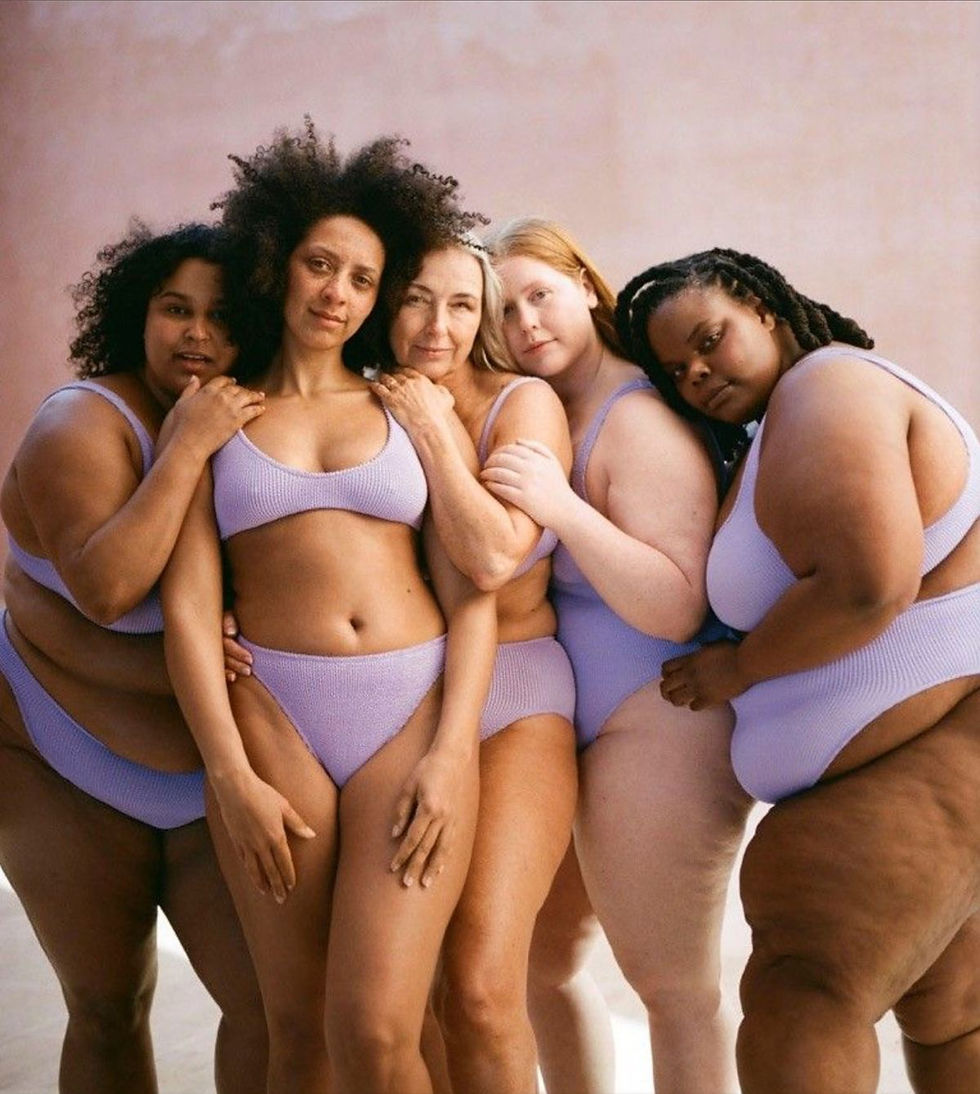
Body image remains a complex and ongoing part of Rebecca's running experience. Having felt self-conscious for some time, running introduced a new level of visibility that could at times feel uncomfortable, particularly when it came to clothing and public perception. The great lack of inclusive sizing within popular running brands has always and continues to be a challenge, not only in terms of access, but in how it reinforces narrow ideas of what a "runner's body" should look like.
“It’s helped me realise it’s more important that I’m moving my body. Tell yourself that no one cares about what you look like.”
Running in public, particularly in warmer months, will still bring moments of self-consciousness for many of us. Wearing clothing that feels more revealing, combined with the visibility of movement, can heighten awareness of the body in ways that are difficult to ignore. However, over time, she has developed ways of navigating these feelings, often by reframing the way she thinks about other people’s perceptions.
Representation within the running space is something that has gradually improved for Rebecca, particularly through sharing her own journey online and connecting with others who have had similar experiences. While negative comments still exist, they are increasingly outweighed by messages of support and appreciation, reinforcing the importance of visibility.
What keeps her going
Motivation, as she describes it, is not something that can be relied on consistently. Instead, it is small mindset shifts that make the difference. Remembering that some of her best runs have come on days when she almost didn’t go at all helps to reframe hesitation, turning it into a reason to try rather than stop.
There is also a growing understanding that effort itself is enough. “There is no such thing as a failed run,” she explains, highlighting a shift away from performance-based thinking. Even short or incomplete runs hold value, and taking breaks is no longer seen as losing progress, but as part of maintaining it.
"You're not a runner... yet"
Rebecca's advice is not rooted in pressure or expectation, but perspective instead. Not everyone needs or should want to run and there is no obligation to enjoy it. However, for those who feel held back by the belief that they are “not that type of person”, she offers a simple reframing: “You’re just not a runner, yet.”
Removing that pressure and allowing the process to be imperfect are all part of the shift. Her own experience, from standing on a path in tears to now being unable to imagine life without running, reflects how much that mindset can change over time.
Maybe running doesn't begin with confidence or even enjoyment. Perhaps it starts with discomfort and uncertainty.
But by no means does it conclude that you're excluded from it.
Sometimes, the most important shift isn't becoming a runner, it's realising that you were always allowed to try.

Comments